
Inside is where we are safe. We can gather, we can rest, we can build and create while being sheltered from the natural threats of our environment.
This way of life was essential to our longevity as a species for thousands of years, but in the modern world, we have advanced infrastructure to the point where our past threats need shelter from us.
INSIDE explores how design can start to let the outside back in and find the balance between ourselves and the natural phenomena we were once bound to.
work - inside
sleep - inside
eat - inside
commute - inside
exercise - inside
socialize - inside


Our built environment severs our ties to the natural phenomena that used to guide our entire way of life. When exploring how design can reunite us with these, three prototypes emerged, each addressing a different natural phenomenon. Cloud patterns & movement, tidal fluctuation and the rise & set of the sun.


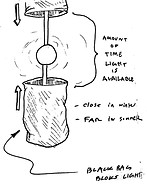

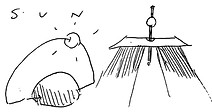

The sun prototype mimics the sun passing from east to west and changes how the light interacts with our surroundings throughout the day. This is achieved with two light bars that are set on opposite sides of the room. The light fading from one to the other is synced with live sunrise and set times of the local area.


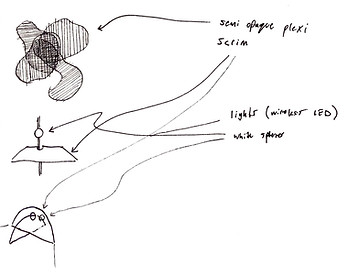


The cloud prototype uses organic-shaped screens to diffuse a light source positioned behind them. The screens slowly shift, grouping tightly to create many layers that diminish the light being emitted into the space or spread sparsely to have few overlapping layers allowing more light to shine through. The amount of light emitted into the space matches the varying levels of sun intensity (caused by cloud coverage) occurring outside.


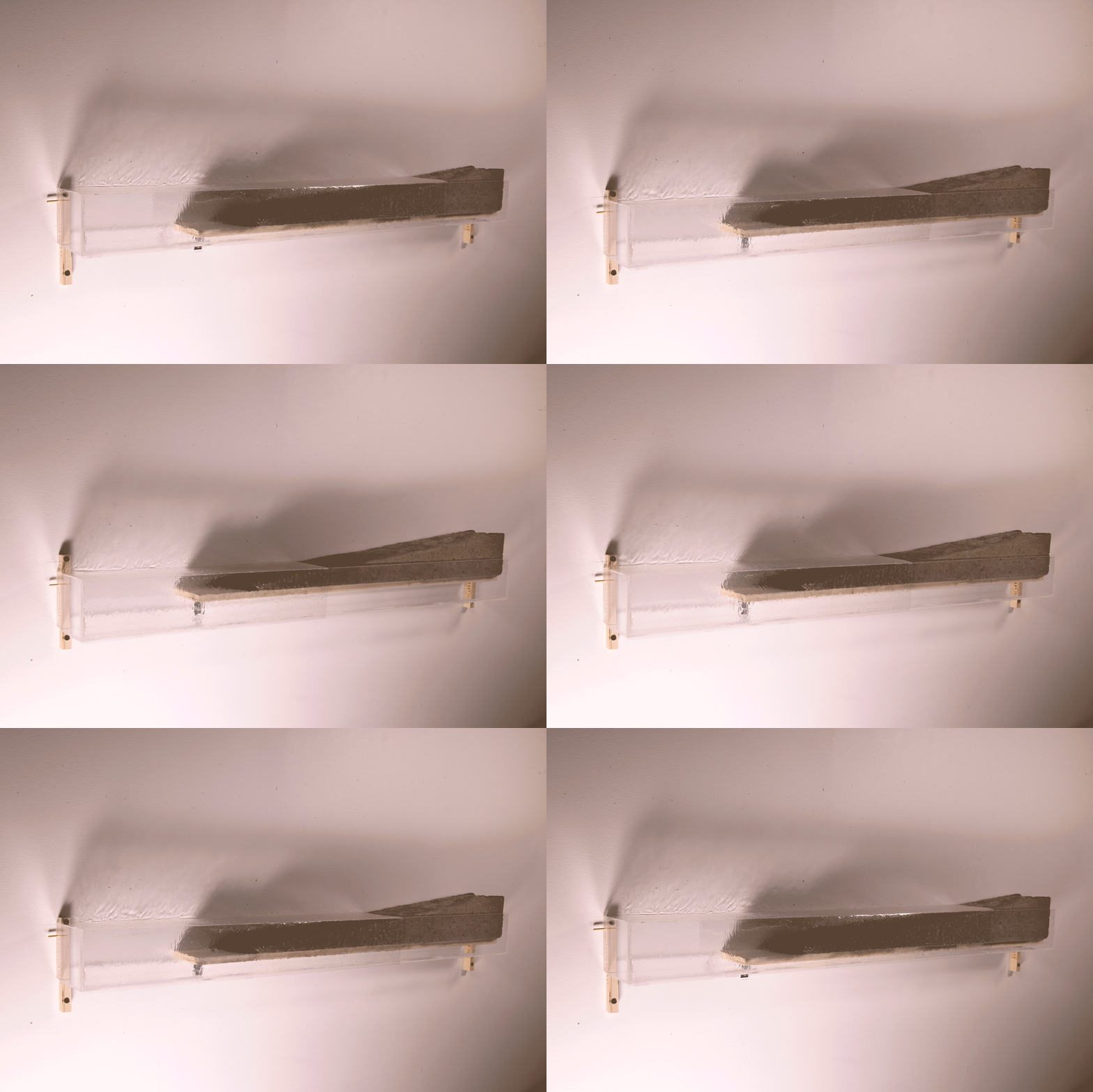


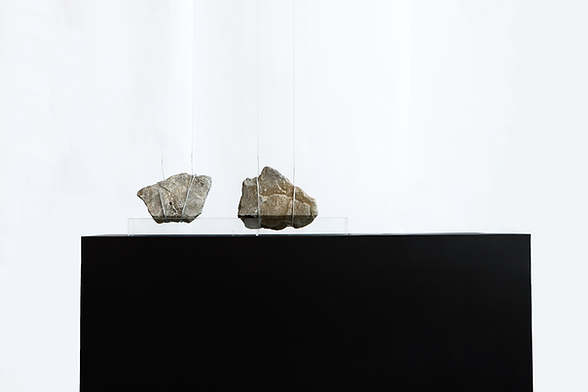
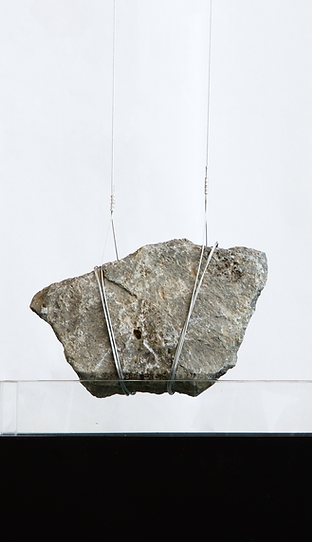
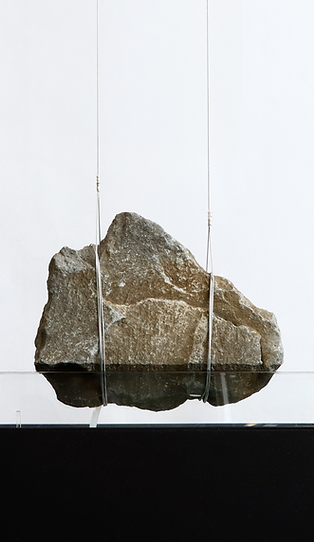
The tide prototype mimics the tide by using a trough of water that rises and falls in sync with the tide. As the water fluctuates, it engulfs and reveals a wedge of stone within the trough itself. The taper of the stone mimics the slope from shore to ocean... the less stone showing, the higher the tide and vice versa.

After conversations with my professors and classmates

The tidal prototype delivered conceptual impact and new and exciting challenges to overcome that the others seemed to lack.


and what a challenge it was....
This project required me to learn countless new skills such as coding and Arduino, water-tight plexiglass construction, and hydrodynamic laws like buoyancy and the movement of water under pressure.
A few months and many gallons of water later I was able to complete the final piece you see below
INSIDE
a tidal object for your consideration
-

The final manifestation of INSIDE is the monolithic installation you see above. It is an object that sits somewhere between architectural installation, kinetic sculpture and clock. But whatever you want to call it its purpose is the same.
To sit in a space with you. To rise and fall of its own accord. To subconsciously connect you to a rhythm other than the one you have created for yourself.
I hope it stands as an advocate for the reintegration of nature into the rhythms of our lives. I hope it shows that we have the capability to give nature agency and a place in our built environment beyond a plastic pot. I hope it challenges designers, architects, urban planners, and everyone else to push their abilities and stop settling for a moss wall or a fountain as a sufficient work of Biophilic Design.
We spent centuries advancing our built environment to be bigger, more efficient, cheaper, and safer. We now have billions of people living and working in buildings made of metal and glass that are hundreds of stories tall. Yet, we have never been more disconnected from the natural world and from ourselves. Nearly every study ever done on this subject is screaming at from the building tops that our inside lives are killing us. It is time to start using our incredible advancements in technology, building techniques, biology, psychology and more to find our middle ground. Its time for life inside to have a little more life inside.

How it works
hover over each description for a highlighted look


Houses the clear tank and acts as a sheath for it to ascend and descend in and out of.
Has an open trough filled with water that swallows the rocks as it rises (this is the only visible part of any of the tanks). Extending underneath the visible upper trough there is a sealed chamber (labeled AIR) that allows the entire tank to float.
Houses the main tank, reserve tank and all electronic components.
clear tank
reserve tank
Holds water while the main tank is empty (at low tide).
Starting at low tide, the first pump takes water from the reserve and pumps it into the main tank. This forces the clear tank (that is floating inside the main tank) upwards towards the stones as it rises to high tide. Once high tide is reached the second pump pulls water from the main tank back into the reserve, allowing the clear vessel (floating at maximum height) to return downwards and nest back inside the main tank. The third pump recycles water from the main tank into the upper trough section of the clear vessel keeping it full at all times. This is in order to avoid the rocks displacing water out of the clear tank at high tide and having it descend only partially full. All the pumps are hooked up to an Arduino running on a custom program I wrote that pulses the water pumps, controlling the ascend and descend of the clear vessel to match tide rise and fall data. This also means that any data can be input to match any tidal fluctuation across the globe.
For the duration of its installation at ECUAD, the rise and fall were synced with the tidal levels here in Vancouver.
Main tank
Main body